
Game development
Starshade Strike Squad: When an Experiment Became a Game
Starshade Strike Squad started with a fairly simple idea: could we make a small, enjoyable tactical game where you command three operatives on short missions, without turning it into an exercise in military logistics?
Something you could play in five minutes. A little tactical challenge, a few interesting decisions, and hopefully that wonderful feeling of having outsmarted the enemy.
Simple enough, right?
Well, game design has a habit of making seemingly simple ideas rather complicated.
Finding the Right Rhythm
One of our biggest challenges was deciding how the game should actually play.
We experimented with different approaches and discussed everything from fully simultaneous WEGO turns to real-time action.
Neither quite delivered what I wanted.
I wasn't looking for an elaborate tactical simulation. I wanted something where you could make a few clever decisions, watch the consequences unfold, and immediately feel like trying another mission.
Eventually, we found a rhythm that worked: plan the actions of your three operatives, commit to them, and let the enemy respond.
It sounds straightforward, but getting there involved plenty of discussions, experiments, and adjustments.
And quite a few moments of wondering whether we'd made things unnecessarily complicated.
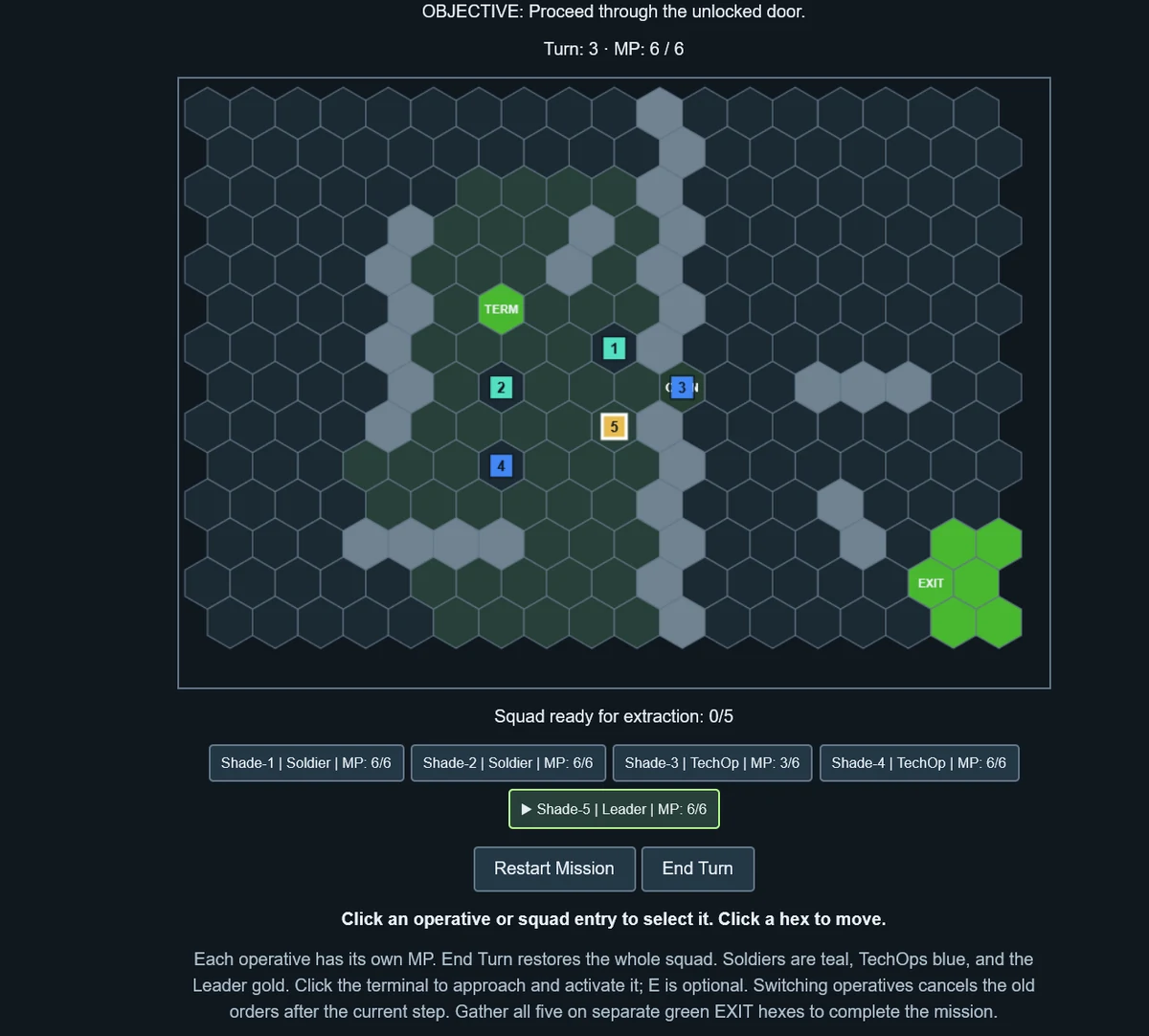
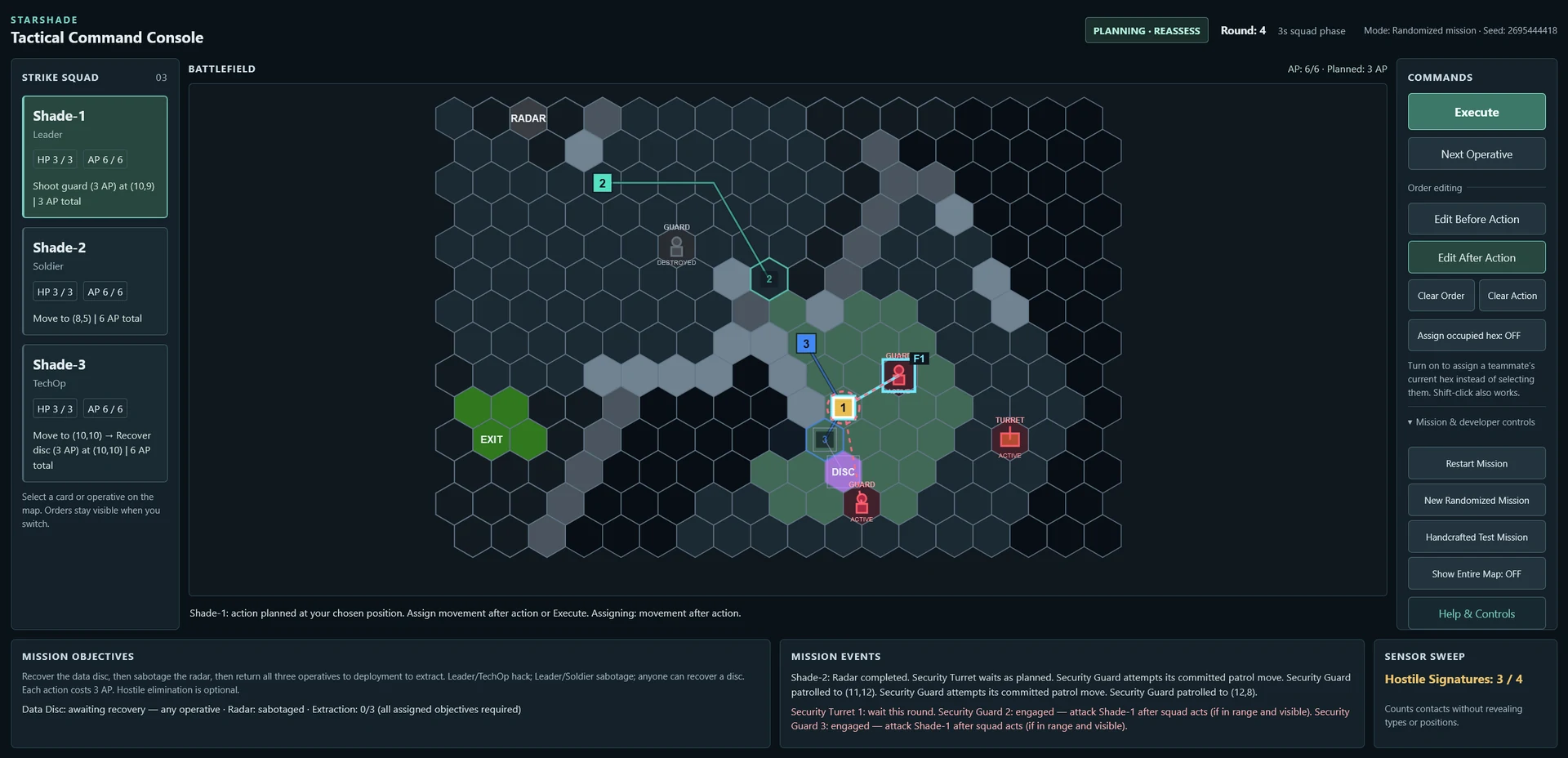
The Danger Zone Breakthrough
One feature I'm particularly happy with is our danger-zone system.
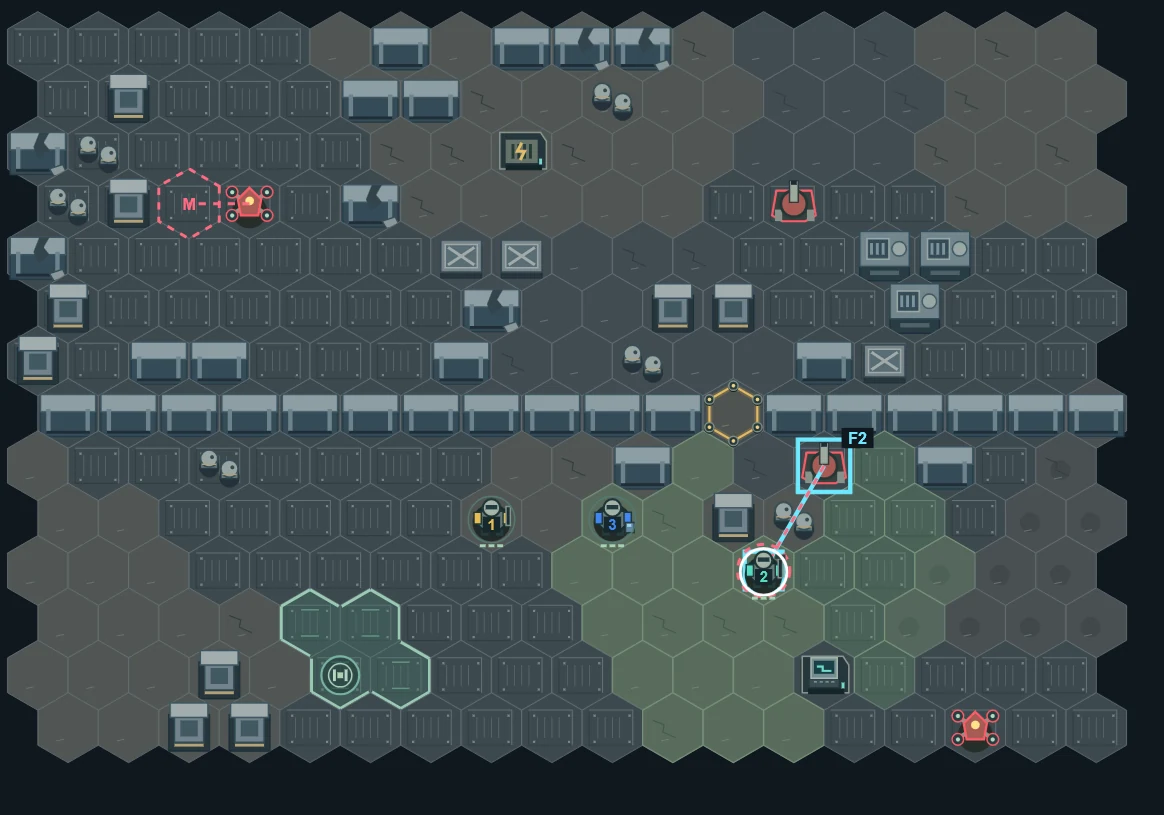
As the game developed, we introduced more enemy types with different abilities. That made missions more interesting, but it also introduced a problem: how could players understand the threats facing their squad without having to memorise a small encyclopedia of enemy behaviour?
Our solution was to show those threats directly on the battlefield.
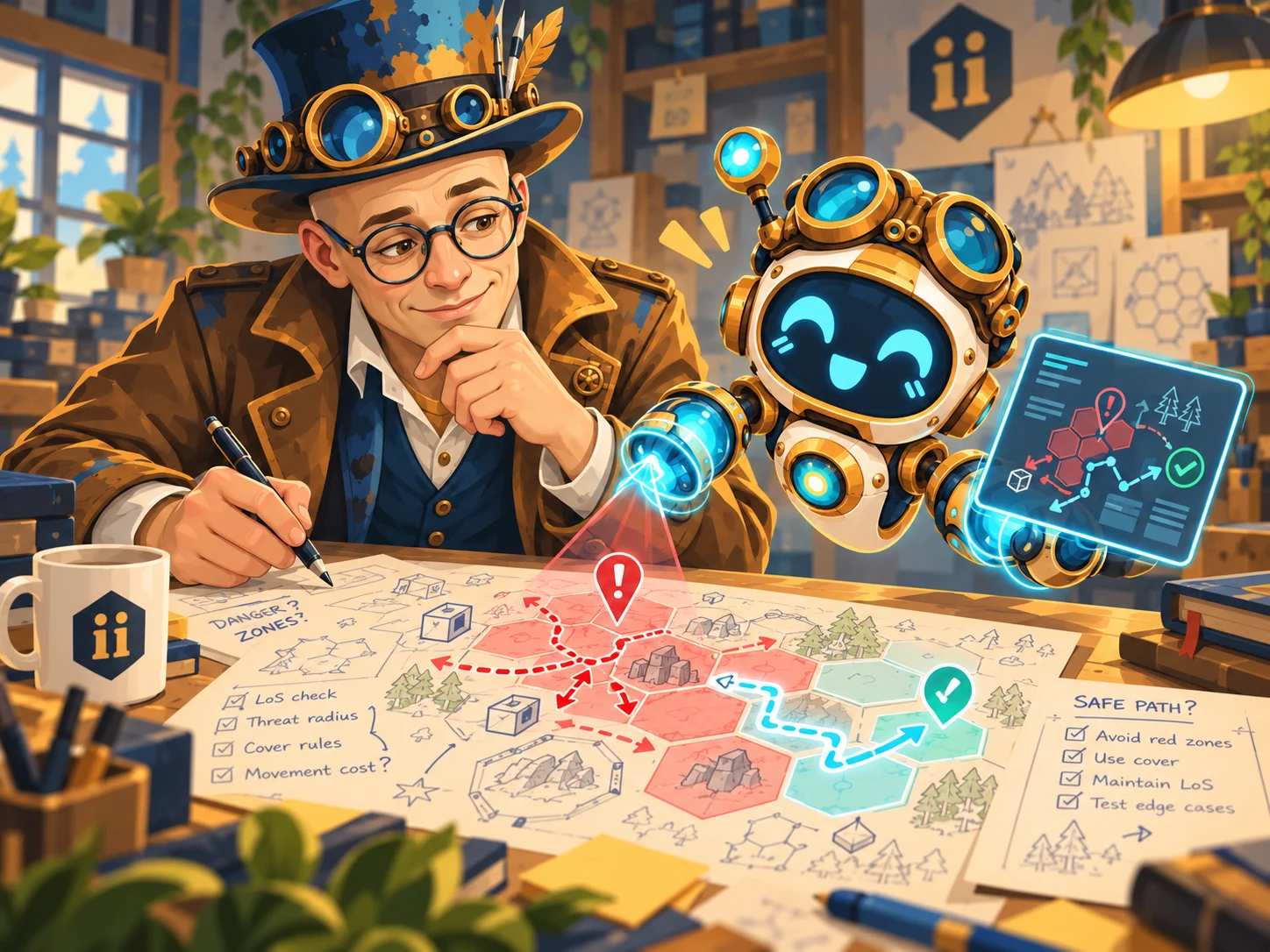
Now you can see which areas are threatened, whether an operative is in danger, and how your planned actions might eliminate that danger before the enemy gets a chance to respond.
It took some work to get everything functioning properly, but when it finally came together, I was genuinely delighted.
Suddenly, the battlefield became much easier to read. And more importantly, the tactical decisions became more enjoyable.
Of course, we've also got enemies like the Burrower, which have their own ideas about what constitutes a safe place to stand.
The Moment It Became a Game
There's a lot of playtesting involved in developing a game.
You try something, spot a problem, make an adjustment, and test it again. Sometimes you play the same kind of mission repeatedly, not because you particularly want to, but because you're checking whether something works.
And then something interesting happened.
I caught myself playing Starshade Strike Squad when I didn't actually need to test anything.
I was simply enjoying myself.
For me, that was an important moment. It suggested that underneath all our experiments, tweaks, and occasional frustrations, we were creating something genuinely entertaining.
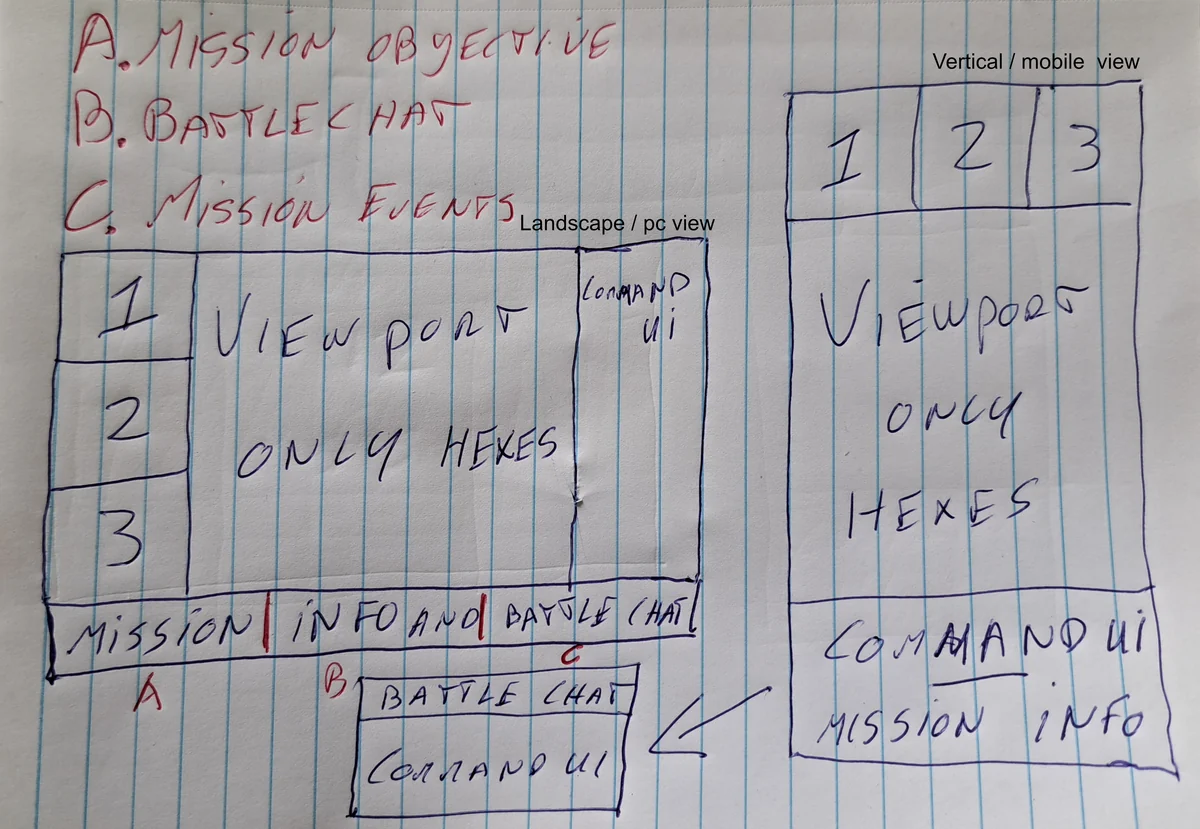
There's still plenty to do. The interface needs more work, the presentation can improve, and I suspect we'll be adjusting little details for quite some time.
But the core is there.
A Clever Little Game
If there's one thing I'd like people to remember after playing Starshade Strike Squad, it's not the number of enemies, the different abilities, or any particular technical achievement.
I'd like them to finish a mission, smile, and think:
“What a clever little game.”
That's really what we're trying to make.
And the fact that I'm already playing it for fun?
Well, I think that's a promising start.